
Iran After Khamenei

Md Uzzal Hossain
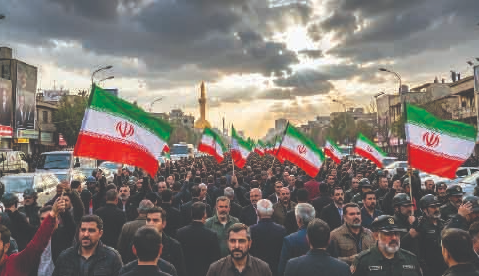
History rarely turns on quiet moments. More often, it pivots in sudden shocks that seem, at first glance, to shatter political structures but ultimately reveal the deeper forces that sustain them. The killing of Ali Khamenei in a coordinated United States–Israeli strike in Tehran belongs to that category of events. It is not only the death of a statesman. It is a moment that forces a reassessment of the ideological architecture of the Islamic Republic and the durability of the revolutionary project launched in 1979.
The elimination of Iran’s Supreme Leader appears as the ultimate decapitation strike, a surgical attempt to destabilize a system that has long defined itself through resistance to Western pressure. Yet such interpretations risk misunderstanding the ideological foundations of the Islamic Republic. Within Iran’s political theology, martyrdom is not synonymous with defeat. On the contrary, it is the highest expression of loyalty to divine justice and political conviction.
The Architect of Continuity
For nearly four decades, since 1989, Khamenei functioned as the principal guardian of the Iranian revolutionary state. After the death of Ruhollah Khomeini, he inherited a political system still in the process of believe and greater plan.
Unlike the revolutionary fervor that marked the early years of the Islamic Republic, Khamenei presided over an era in which ideology had to coexist with statecraft. The Supreme Leader’s office gradually became the axis around which Iran’s political system revolved. From oversight of the armed forces to influence over foreign policy and judicial authority, the role expanded into a nexus of religious legitimacy and strategic governance.
Western commentary frequently portrayed Khamenei as an absolute autocrat, but such descriptions oversimplify Iran’s political structure. The Islamic Republic operates through a complex hybrid system combining elected institutions, such as the presidency and parliament with unelected religious bodies. The Supreme Leader’s authority lies not only in political control but also in acting as custodian of the Revolution’s guiding principles, particularly the doctrine of Velayat-e Faqih, the guardianship of the Islamic jurist.
This doctrine places ultimate authority in the hands of a senior cleric who ensures that governance remains aligned with Islamic law and revolutionary ideals. It is precisely this ideological structure that allowed the system to endure repeated crises, from economic sanctions to mass protests.
Khamenei’s leadership, therefore, should be understood less as personal dominance and more as institutional consolidation. His power lay in embedding the Revolution’s ideology within durable structures, the security apparatus, the judiciary, and religious oversight bodies that could function even in his absence.
The Strategic Miscalculation
If the architects of the strike expected the assassination of the Supreme Leader to trigger systemic collapse, the initial signals suggest a different outcome. Iranian political history demonstrates that external threats often generate internal cohesion rather than fragmentation.
The immediate reaction inside Iran has been one of national shock combined with calls for retaliation. Political factions that frequently disagree on domestic policy appear united in framing the attack as a violation of national sovereignty. This dynamic is consistent with previous crises, particularly the killing of Qassem Soleimani in 2020.
Soleimani’s death triggered one of the largest public mobilizations in the Islamic Republic’s history. Yet the symbolic implications of Khamenei’s assassination are arguably even greater. Soleimani was a celebrated military strategist, but Khamenei occupied a different category altogether. As the country’s highest religious authority, his role transcended the ordinary boundaries of politics.
For millions of Iranians, the Supreme Leader was not a policymaker but a spiritual guide whose legitimacy derived from religious scholarship and revolutionary credentials. The perception that such a figure was targeted by foreign powers is likely to deepen the narrative of existential struggle that has long defined the Iranian state.
Martyrdom as Political Capital
In Western strategic thinking, targeted killings are often justified as tools of deterrence or disruption. The logic assumes that eliminating key figures weakens organizational coherence. Yet in ideologically driven systems, such actions can produce the opposite effect.
Within Shiite theology, martyrdom transforms death into a form of victory. The fallen leader becomes part of a sacred lineage that legitimizes continued resistance. This narrative is deeply embedded in Iran’s revolutionary identity, where sacrifice is often portrayed as the ultimate affirmation of faith.
The concept also intersects with eschatological expectations. In Shiite belief, the return of Imam Mahdi will inaugurate a final era of justice. Historical struggles are frequently interpreted as preparation for that moment. Leaders who die defending the faith are therefore remembered not as victims but as participants in a cosmic struggle between justice and oppression.
For analysts seeking to understand Iran’s likely trajectory, this worldview cannot be dismissed as mere rhetoric. It shapes political legitimacy, mobilization strategies, and the state’s narrative of survival.
A System Designed for Succession
Another crucial factor limiting the destabilizing impact of Khamenei’s death lies in the constitutional framework of the Islamic Republic. Unlike many revolutionary regimes, Iran institutionalized a formal mechanism for leadership transition. Following the death of a Supreme Leader, an interim council assumes authority until the Assembly of Experts selects a successor. This body, composed of senior clerics, is tasked with ensuring that the new leader possesses both religious qualifications and political reliability.
This system reflects a fundamental principle embedded in the Revolution’s design: the Islamic Republic must outlive its founders. The survival of the state cannot depend on the charisma or longevity of a single figure.
Consequently, Khamenei’s death may be interpreted internally not as the collapse of leadership but as a test of institutional resilience. If the transition proceeds smoothly, it will reinforce the perception that the revolutionary system has matured into a self-sustaining political order.
The Rise of Mojtaba Khamenei
Attention has quickly turned to the possible emergence of Mojtaba Khamenei as the central figure in the next phase of Iran’s leadership. Though he has rarely appeared in public speeches, Mojtaba has long been rumored to wield considerable influence behind the scenes. His political orientation is widely described as “hardline,” a term that often carries moral judgments in Western discourse. In the Iranian context, however, the label has a more precise meaning.
It denotes commitment to the foundational principles of the 1979 Revolution, clerical authority, resistance to Western political models, and the defense of Islamic governance. Mojtaba’s reported ties to the Islamic Revolutionary Guard Corps (IRGC) and the Basij militia situate him within the institutional networks responsible for safeguarding the revolutionary system. These organizations were created not as security forces but as ideological guardians tasked with protecting the state from internal and external threats. Such affiliations suggest that any leadership role he assumes would emphasize continuity rather than transformation. Reformist visions of liberalizing Iran’s political system or recalibrating relations with the West are unlikely to gain traction under such circumstances.
Hardline Doctrine and Revolutionary Stability
The divide between hardliners and reformists in Iran is frequently misunderstood abroad as a clash between authoritarianism and moderation. In reality, the disagreement is often doctrinal rather than temperamental. Reformist factions argue for reinterpretations of sovereignty that expand civil liberties and open avenues for engagement with Western states. Hardliners, by contrast, view such shifts as potential erosion of the Revolution’s core identity.
For them, the Islamic Republic represents not an interim political arrangement but the culmination of a civilizational project. Its legitimacy derives from its claim to embody an Islamic alternative to Western secular governance. Mojtaba Khamenei’s political alliances place him firmly within this latter camp. His silence in public debates far from indicating neutrality has often been interpreted as loyalty to the prevailing ideological line of the institutions with which he is associated.
Iran’s Strategic Calculus in a Post-Khamenei Era
The transition following the Supreme Leader’s death occurs at a moment of extraordinary regional tension. Iran remains engaged in a shadow conflict with Israel, while relations with the United States are defined by sanctions, proxy confrontations, and nuclear negotiations. A new leader in Tehran, one lacking the revolutionary credentials of his predecessors will face immediate pressure to demonstrate strength. In such circumstances, restraint may be interpreted as vulnerability.
This dynamic suggests that Iran’s response to Khamenei’s assassination will likely follow a calibrated strategy of retaliation. Rather than escalating into direct conventional warfare, Tehran may rely on asymmetric methods that have long defined its regional posture: proxy networks, strategic deterrence, and targeted operations designed to raise the costs for its adversaries At the same time, the leadership will have to balance ideological defiance with pragmatic statecraft. Total war would threaten the very survival of the system the Revolution created.
The Revolution Beyond Individuals
Ultimately, the significance of Khamenei’s death lies not only in the geopolitical tensions it intensifies but also in what it reveals about the nature of revolutionary regimes. Systems built solely around personal authority often disintegrate when their leaders disappear. But revolutions rooted in ideology and institutional networks tend to exhibit greater resilience.
The Islamic Republic was constructed precisely with this longevity in mind. Its founders envisioned a state sustained by religious legitimacy, strategic patience, and a narrative of resistance against external domination. In that sense, the assassination of the Supreme Leader may become a defining moment not because it weakened the Revolution, but because it reinforced its mythological foundation. Martyrdom transforms political loss into moral continuity.
A New Chapter in Iran’s Revolutionary Story
The death of Ali Khamenei marks the end of a historic era in Iranian politics. Yet it also inaugurates a new phase in which the Islamic Republic must redefine its leadership while reaffirming its ideological identity. If history is any guide, the Revolution that began in 1979 will not disappear with the passing of one man. Its endurance rests on institutions, beliefs, and narratives that have survived war, sanctions, and decades of international pressure.
Those who assumed that removing the Supreme Leader would dismantle the Iranian system may have misjudged the nature of the state they sought to weaken. In Iran’s political imagination, power is not measured solely by the longevity of leaders. It is measured by the persistence of the cause they represent. In the language of the Islamic Revolution, martyrdom does not close a chapter of history. It opens another.