
Revisiting the Legacy of Sheikh Hasina’s Rule in Bangladesh

Tazminur Rahman Shuvo
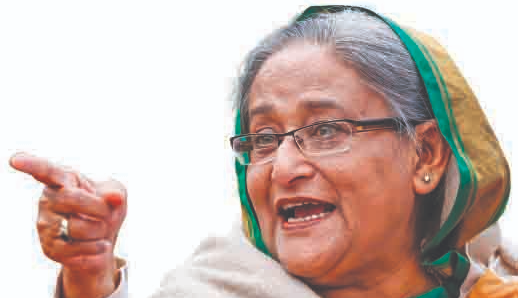
One year after Sheikh Hasina’s fall from power, a reckoning begins—not with rage, but with reflection. A reflection on a regime that claimed democracy while undermining its every pillar, that spoke of development while mortgaging national sovereignty, and that promised stability while orchestrating repression. This is a chronicle of Sheikh Hasina's long reign, not told through her propaganda—but through the bruises on a nation’s soul.
The Collapse of Democratic Aspirations
In the lead-up to the revolutionary wave of July–August 2024, Bangladesh's democratic trajectory had already veered dangerously off course. Movements for electoral transparency and civic participation had risen and fallen, often crushed under the weight of state violence and systemic manipulation. In this bleak political climate, the urgency grew among pro-democracy forces to expose the true nature of Sheikh Hasina’s regime, especially in the face of her relentless media machinery, which cast her rule as visionary and benevolent.
A comprehensive compendium of her government’s misdeeds was discreetly circulated among trusted circles prior to the July Revolution, carefully avoiding detection in a digital space tightly controlled by the state. Although the document predated the bloodshed of 2024, its content painted a shocking and extensive portrait of nearly one and a half decades of authoritarian consolidation. It asked a haunting question: “What crime did she not commit?”
The Electoral Farce: Three Terms of Fraudulence
At the heart of Sheikh Hasina’s legacy lies the deliberate subversion of electoral democracy. Her political survival strategy involved mastering the art of illegitimate victory. Though often omitted from contemporary memory, the 2008 election, marred by backroom deals and strategic silence, was followed by a trilogy of increasingly brazen electoral deceptions.
In 2014, the very architecture of electoral competition was dismantled through the abolition of the caretaker government system, an act of constitutional betrayal. The resulting one-party “election,” boycotted by the opposition and blessed by Indian diplomatic pressure, lacked both participation and legitimacy. The 2018 elections marked an even darker turn; ballots were stuffed the night before the vote in what can only be described as a state-orchestrated heist. And in 2024, under the full weight of her fascistic machinery, Hasina staged a theatrical “dummy” election, installing puppets to simulate democracy while silencing real dissent with force.
Vengeance as Statecraft
Hasina’s rule bore all the hallmarks of a personal vendetta disguised as governance. Her longstanding hostility toward political opposition—particularly the Bangladesh Nationalist Party (BNP) and Bangladesh Jamaat-e-Islami (BJI)—resulted in systematic disenfranchisement, criminalization, and even incarceration of opposition leaders. In an alarming distortion of justice, thousands of activists were jailed or forced into hiding. Judges were influenced. Verdicts were tailored. And in the name of justice, vengeance reigned.
The 2011 constitutional amendment that abolished the non-partisan caretaker government set the tone for autocratic governance. Parliament and local institutions morphed into clubhouses for loyalists, family members, and cronies. Positions of national importance became spoils of partisan allegiance rather than merit or public trust.
From Democracy to Dictatorship: The Erosion of National Dignity
Bangladesh, once hailed for its hard-earned post-1990 democratic rebirth, was thrust into the ranks of authoritarian states under Hasina’s watch. International watchdogs sounded the alarm. Yet, with astonishing defiance, she declared herself the guardian of voting rights ironically, after robbing the public of their voice.
Cabinet ministers, some of whom claimed the mantle of leftist politics, openly dismissed democracy as a Western illusion unsuited for Bangladesh. There are some political figures once associated with pro-people narratives who became spokespersons of state tyranny.
Killings, Disappearances, and State Terror
Between 2013 and 2024, repression became institutionalized. The security apparatus—police, RAB, and DGFI—operated as an unofficial wing of the ruling party, executing orders not from the constitution but from political command. The massacre of sleeping children at the Hefazat-e-Islam rally at Shapla Chattar in 2013 remains one of the darkest nights in Bangladesh’s modern history. But it was not isolated. Mass enforced disappearances during election cycles, the murder of military officers under the pretext of the BDR mutiny in 2009, and extrajudicial killings—such as the infamous Narayanganj seven reveal a pattern: eliminating any perceived threat to regime stability.
And behind much of this violence lay the invisible hand of foreign interference. Indian diplomats, particularly the then Foreign Secretary, played instrumental roles in coercing political actors into legitimizing elections in 2014. Hasina's strategic alignment with India, often at the expense of national interest, ensured her survival, but at what cost?
Subservience in Foreign Policy
In her effort to secure legitimacy abroad, Hasina willingly mortgaged Bangladesh’s sovereignty. Her repeated boasts about “concessions to India” betrayed a troubling truth: Bangladesh’s foreign policy had become a tool of political preservation, not national interest.
Transit was granted without compensation. The Teesta water-sharing agreement remained elusive. Border killings by Indian forces continued with impunity. Even as Bangladesh opened its veins to its neighbor, its people were treated as intruders in their own homeland. Her appeasement diplomacy with select powers contrasted sharply with her uncouth remarks against others, including ambassadors, reflecting an alarming lack of diplomatic etiquette.
Authoritarianism Institutionalized
Under the pretended drama of development, Hasina established a North Korea-style dynastic regime: opaque, corrupt, family-centered, and brutally intolerant. A culture of impunity infected every level of administration. Bureaucrats acted as Awami League cadres. Police became enforcers of party discipline. Media outlets turned into echo chambers of state propaganda.
The glorification of Sheikh Hasina reached absurd heights, with state slogans such as “Sheikh Hasina’s Bangladesh” printed on textbooks and public billboards. Schools, courts, and civil service exams became zones of ideological vetting rather than merit-based competition. And as a result, a terrifying new normal emerged: servility replaced citizenship; submission replaced aspiration.
The Economic Mirage: Behind the GDP Hype
While official statistics touted macroeconomic growth, the lived reality of Bangladeshis told another story. Inequality surged. The cost of living spiraled. The income of the middle and lower classes stagnated. Prices of basic commodities were manipulated for commission gains. Bribes became a budget line.
Massive infrastructure projects—such as the Padma Bridge—ballooned in cost amid allegations of corruption. Projects like the Rooppur Nuclear Power Plant and the Rampal Power Plant were negotiated on unequal terms, mortgaging environmental and fiscal futures for regime propaganda. Meanwhile, wealth was siphoned abroad. An estimated five lakh crore taka left the country during Hasina’s tenure. Scandals in Islami Bank, Janata Bank, Basic Bank, and Sonali Bank went unpunished. The cyber heist at Bangladesh Bank in 2016, the Rana Plaza tragedy in 2013, and the repeated collapse of the stock market were not accidents; they were inevitable outcomes of systemic rot.
Destiny, Evaly, and other Ponzi schemes looted millions under the indifferent eyes of regulators. The dollar crisis, driven by mismanagement and money laundering, choked the remittance-dependent economy.
Youth, Education, and the Death of Aspiration
No sector bore the brunt of Hasina’s rule more cruelly than education. Schools and universities, once bastions of thought and hope, became laboratories of ideological policing. The Chhatra League, the student wing of the ruling party, ran terror campaigns across campuses. The murder of BUET student Abrar Fahad for merely expressing a nationalist opinion was emblematic.
Merit was replaced with loyalty. Quotas ensured that political allegiance outweighed competence in government recruitment. As a result, the country witnessed a brain drain of historic proportions, with young, educated Bangladeshis fleeing for freedom and dignity abroad. Ironically, while Bangladeshi talent serves in first-world institutions, unqualified foreigners, especially from neighboring India, occupy lucrative positions in Dhaka.
The Pandemic, Corruption, and Media Control
Even during the COVID-19 crisis, Hasina’s government demonstrated astounding indifference. Health sector corruption flourished. Ventilators remained missing. Quack hospitals popped up overnight. Elites flew abroad for treatment, abandoning the masses.
Simultaneously, independent media was gutted. Iconic outlets like Amar Desh, Islamic TV, and Diganta TV were shuttered. Journalists were jailed. Surveillance increased. Bangladesh's global press freedom rankings plummeted. The tragic murders of journalist couple Sagar-Runi, the disappearance of Ilias Ali, and countless unresolved killings signaled one thing: truth had become a punishable offense.
Minorities, Farmers, and the Forgotten Masses
While the Awami League cynically used the Hindu minority for electoral signaling, it failed to protect them from communal violence in districts like Brahmanbaria and Jessore and many other districts like these. Meanwhile, farmers received no fair price for their crops. Extortion and middlemen dominated the agro-sector. Environmental degradation soared. Rivers was grabbed. Forests were razed. Air and water became toxic. Yet the government remained obsessed with “Smart Bangladesh” slogans that masked a grim ecological reality.
Loot, Lies, and the Weaponization of History
Hasina’s ruling party normalized looting. From public housing scams to tender hijacking, rape, and murder by youth and student wings, every institution became a theater of corruption. No audit was ever published on the wealth of ministers or MPs. No explanation was given for the lavish foreign lifestyles of her family.
Even sports weren’t spared. From Salahuddin’s football mismanagement to Papon’s politicization of cricket, national pride was sacrificed at the altar of nepotism. Worse still was the weaponization of history. Sheikh Hasina’s regime attempted to erase Ziaur Rahman, the proclaimed independence hero, while monopolizing the Liberation War narrative for political gain. Lies were codified in textbooks, denying future generations the right to authentic history.
The Judiciary, the Constitution, and the Final Betrayal
The judiciary ceased to be independent. A judge’s comment—“Truth is not a shield”—revealed ”the depth of moral collapse. Constitutional amendments were used not to uphold democracy but to entrench tyranny. Legal tools were repurposed for political revenge. Nobel laureate Dr. Muhammad Yunus was humiliated; Chief Justice SK Sinha was exiled. In this circus of authoritarianism, Sheikh Hasina's final betrayal was personal: she broke her pledge to retire at 57, remaining in office past 75. She seized the Ganabhaban. She held power illegally after 2014. And she created a system where peaceful transition was no longer possible—where revolution became not a choice, but an inevitability.
A Year Later, Memory Fights Back
On August 5, 2024, the Hasina regime collapsed under the weight of its contradictions and the courage of a generation that chose blood over bondage. A year later, we do not recount these crimes for vengeance but for vigilance. A society that forgets its wounds risks repeating its tragedies. And so, when Sheikh Hasina still asks, “What is my crime?” we answer not with rage, but with record. This is her record.
And history does not forget.