Trump’s Board of Peace and the Future of Small States

Abdus Salam
When power begins to speak more loudly than principle, the vocabulary of international politics changes. Institutions become instruments, ceasefires become bargaining chips, and peace itself risks being redefined as a transaction among the strong. The re-emergence of Donald Trump onto the global stage with his proposed “Board of Peace” signals precisely such a moment—one in which the grammar of global order may tilt decisively away from law and toward leverage.
The contemporary international system is not merely unsettled; it is structurally strained. The prolonged war in Ukraine has hardened front lines and geopolitical blocs alike. The humanitarian devastation in Gaza has exposed the moral paralysis of major powers. Tensions surrounding Iran’s regional posture continue to simmer, threatening wider conflagration. Venezuela remains mired in political fragility and economic distortion, while Arctic competition, particularly over Greenland reveals how climate change is opening new theaters of rivalry. Each of these crises does more than destabilize its immediate region; collectively, they erode confidence in the post–World War II architecture of governance.
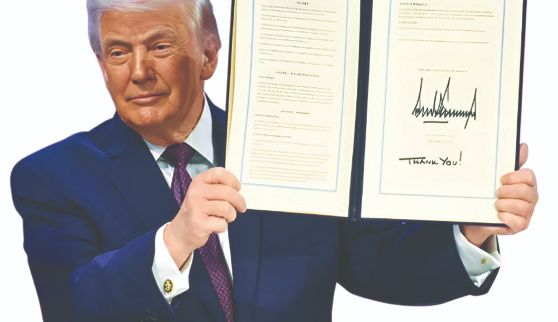
It is against this backdrop that U.S. President Donald Trump unveiled his proposed “Board of Peace” during the annual gathering of global elites at the World Economic Forum in Davos. On the surface, the initiative appears to respond to the urgent demand for conflict de-escalation—beginning with a permanent ceasefire in Gaza. Yet the structure, rhetoric, and geopolitical timing of the proposal suggest something more ambitious and more consequential: the institutionalization of a power-centric peace mechanism operating parallel to, and potentially in competition with, the United Nations.
Trump has indicated that he would chair the Board himself, a symbolic move that fuses personal political authority with global mediation. According to his outline, the initiative would coordinate with the UN but function as a distinct forum capable of advancing rapid agreements where multilateral diplomacy has stalled. The Gaza component, framed around a durable ceasefire, humanitarian access, infrastructure reconstruction, intra-Palestinian reconciliation, and long-term political stabilization appears comprehensive. Yet its sequencing places negotiations among influential states at the center of implementation.
Countries, including regional heavyweights such as Saudi Arabia, Turkey, Egypt, Jordan, Indonesia, Pakistan, and Qatar, have reportedly signaled willingness to participate. Notably, however, European powers such as France and United Kingdom have distanced themselves publicly. Meanwhile, China and Russia remain strategically ambiguous. This uneven alignment is revealing: it hints that the Board may become less a universal peace forum and more a selective coalition structured around converging interests.
The proposal that each country might contribute a substantial financial commitment—figures circulating billion dollars for permanent membership has intensified skepticism. If participation in global peace architecture requires such an entry cost, then the moral premise of collective security begins to blur. Financialized multilateralism risks privileging states with resources over those with grievances, reinforcing the very inequalities that often underlie conflict.
The Board’s emergence amid the Gaza war underscores a central tension. Will the primary criterion for “peace” be humanitarian justice or geopolitical stability? If ceasefire arrangements are designed primarily to contain regional escalation and safeguard strategic interests, such as energy routes, alliances, electoral optics. Then the humanitarian catastrophe becomes a variable in power management rather than a moral imperative in itself. This logic resonates with Trump’s earlier diplomatic approach through the Abraham Accords, which normalized relations between Israel and several Arab states without resolving core Palestinian statehood questions. The Accords prioritized strategic realignment over final-status justice; the Board of Peace appears to extend that template into a broader institutional form.
Trump’s rhetoric regarding the war in Ukraine further clarifies the philosophy underpinning the initiative. His repeated claim that he could end the conflict within twenty-four hours signals confidence not in international law but in transactional diplomacy among great powers. The implication is stark: sovereignty, accountability for war crimes, and territorial integrity may be subordinated to negotiated equilibrium. Such an approach challenges the normative foundations of the post-1945 order, which sought—however imperfectly to embed state behavior within legal constraints.
If peace becomes primarily the outcome of bargains struck by powerful actors, then smaller states must adapt to a system where moral argument carries diminishing weight. This marks a profound departure from the rules-based international order that emerged after World War II. That order was built on the premise that institutions, particularly the UN and its Security Council, could mitigate the raw calculus of power. Yet the frequent paralysis of the Security Council, owing to veto politics has eroded faith in its effectiveness. The Board of Peace appears designed to capitalize on that frustration, positioning itself as a more agile alternative.
The cases of Venezuela and Greenland further illuminate the geopolitical horizon. In Venezuela, rhetoric around restoring democracy and combating narcotics intersects with longstanding U.S. interests in oil markets and regional influence. A Board-sanctioned initiative could provide diplomatic cover for policies aimed at recalibrating power balances in Latin America. In Greenland—an autonomous territory within the Kingdom of Denmark—the melting Arctic ice has revealed strategic minerals and shipping lanes of growing significance. Renewed American interest in the territory is not humanitarian; it is geostrategic. An institutional forum like the Board could legitimize negotiations framed as cooperative but driven by resource competition.
Collectively, these strands suggest that the Board of Peace is less an altruistic peace project than a structural pivot toward a more explicit politics of leverage. It sends a message not only to adversaries but also to allies: global stability will be brokered through strategic bargaining. In this sense, the initiative functions as a signal to Beijing and Moscow as much as to Gaza. It asserts that Washington is prepared to recalibrate the architecture of multilateralism if existing institutions constrain its maneuverability.
For critics, this resembles a subtler iteration of Cold War logic. Instead of ideological blocs, the emerging contest centers on spheres of influence, resource corridors, and technological dominance. Peace becomes conditional upon alignment. States possessing strategic assets, energy reserves, logistical corridors and demographic weight gain negotiating capital. Those lacking such leverage must seek alternative strategies to remain relevant.
Here, the implications for smaller and developing countries are profound. Bangladesh, for instance, has historically anchored its foreign policy in UN-centered multilateralism. As one of the largest contributors to UN peacekeeping missions, Dhaka has accumulated significant moral capital within the international community. Its diplomatic posture has emphasized consensus-building, humanitarian advocacy, and adherence to international law. In a system drifting toward transactional power politics, such assets must be recalibrated rather than abandoned.
Bangladesh faces a dual imperative. First, it must intensify its advocacy for meaningful reform within the UN, particularly regarding the Security Council’s veto system. The paralysis witnessed in Gaza and Ukraine underscores the urgency of reexamining how veto power constrains collective action. By forging coalitions with other developing states—across Africa, Latin America, and Asia—Bangladesh can amplify demands for procedural reform that restore credibility to multilateral governance.
Second, Dhaka must strengthen sub-regional diplomacy to hedge against volatility in global power competition. South Asia, situated at the intersection of Indo-Pacific strategy and Eurasian realignments, cannot afford strategic passivity. By deepening engagement within regional frameworks and enhancing issue-based cooperation—on climate resilience, maritime security, and supply chain stability—Bangladesh can cultivate buffers against great-power rivalry.
Crucially, Bangladesh’s experience in humanitarian diplomacy and climate security offers leverage in an era of climate-driven geopolitical shifts. As one of the country’s most vulnerable to climate change, it has moral authority in global climate negotiations. If effectively integrated with pragmatic economic and security strategies, this moral standing can translate into tangible diplomatic influence. In a world where power increasingly dictates outcomes, moral capital must be operationalized through strategic foresight.
The broader question is whether the Board of Peace represents innovation or regression. On one hand, critics of the UN’s inefficiencies argue that flexible coalitions can sometimes achieve what universal bodies cannot. On the other hand, bypassing established institutions risks fragmenting global governance into competing forums, each reflecting the interests of its sponsors. The danger lies in normalization: once parallel structures gain legitimacy, the incentive to reform universal institutions diminishes.
Moreover, the conflation of humanitarian goals with geopolitical bargaining may deepen cynicism among affected populations. If ceasefires are perceived as instruments of power consolidation rather than justice, their durability becomes suspect. Sustainable peace requires legitimacy, and legitimacy cannot be manufactured solely through elite negotiation.
Trump’s skepticism toward multilateral institutions, evident in past criticism of NATO and human rights frameworks casts a long shadow over the Board’s philosophical foundations. His approach privileges sovereignty understood as strategic autonomy, not as reciprocal obligation within a rules-based community. The Board thus reflects a worldview in which order emerges from negotiated equilibrium among powerful states rather than from codified norms.
The United Nations remains at a crossroads. Its founding vision sought to prevent the recurrence of catastrophic global war by embedding power within law. Yet repeated deadlock has exposed structural weaknesses. Reform is politically arduous, given that the beneficiaries of veto power must consent to its modification. Nevertheless, abandoning reform in favor of ad hoc alternatives could accelerate institutional decay.
For developing nations, the strategic landscape demands agility. Aligning uncritically with any emergent forum risks entanglement in great-power agendas. Conversely, rejecting new initiatives outright may forfeit opportunities to shape outcomes. The prudent course lies in calibrated engagement: participating where interests align, while steadfastly advocating systemic reform.
The Board of Peace, if realized, may indeed facilitate ceasefires or conflict de-escalation in specific contexts. Yet its deeper significance lies in what it signals about the trajectory of world politics. The center of gravity appears to be shifting from universal norms toward negotiated power arrangements. This does not necessarily herald chaos; power politics can produce stability. But stability achieved through exclusion or transactional compromise may lack moral resonance.
For Bangladesh and similarly situated states, the moment calls for intellectual clarity and diplomatic innovation. The erosion of normative multilateralism must not induce fatalism. Instead, it should galvanize collective action among the Global South to articulate a vision of order that reconciles justice with pragmatism. Reforming the Security Council, strengthening regional cooperation, and leveraging moral capital in peacekeeping and climate advocacy are not abstract ideals; they are strategic necessities.
The world is entering an era in which peace may be defined less by universal principles and more by negotiated balances. Whether this transformation becomes entrenched depends partly on how smaller states respond. If they retreat into reactive diplomacy, the architecture of power will solidify without them. If they mobilize collectively, they may yet shape the contours of a rebalanced order.
Trump’s Board of Peace thus represents more than a policy proposal. It is a diagnostic moment, a revealing indicator of how global leadership may be reimagined in an age of institutional fatigue. Whether it becomes a vehicle for pragmatic stabilization or a symbol of normative retreat will depend not only on Washington but on the collective agency of states that refuse to let justice become subordinate to leverage. In that struggle between principle and power, the future grammar of international politics will be written.