Venezuela at a Crossroads: The Dark Reality of Maduro’s Third Term
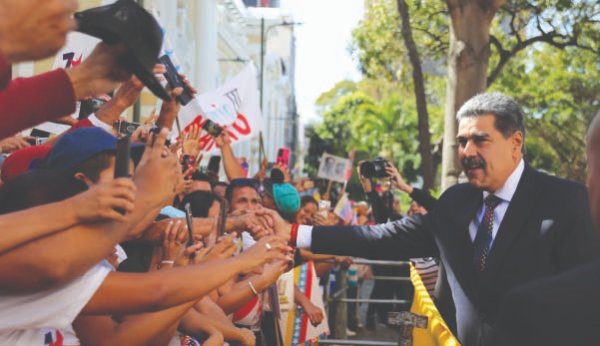
Venezuela, a nation rich in resources yet plagued by turmoil, stands at a defining moment as Nicolás Maduro embarks on his third consecutive term as president. This marks a pivotal crossroads, not only for the country but for Latin America and the global political community. The July 2024 election, mired in allegations of fraud and marred by a lack of transparency, has reignited global debates on how to handle a regime that has shown little willingness to embrace democratic principles. The ongoing crisis in Venezuela, driven by a combination of political, economic, and social factors, continues to shape the region’s stability, impacting everything from regional power dynamics to international relations, particularly with the United States.
From Chávez to Maduro: The Legacy of a Divided Nation
The roots of Venezuela’s current turmoil trace back to the era of Hugo Chávez, whose ascent to power in 1999 marked the beginning of a radical transformation under the banner of the “Bolivarian Revolution.” Chávez’s populist policies, characterized by sweeping nationalizations and social welfare programs, were designed to uplift the country’s disenfranchised populations, primarily through the redistribution of wealth and empowerment of the poor. His promises of an inclusive economic model centered on the oil-rich nation’s vast reserves were initially met with widespread enthusiasm. His legacy remains powerful, especially among the working class, even as his policies planted seeds of systemic instability that would eventually unravel the Venezuelan economy.
However, Chávez’s reliance on oil revenue and his failure to address the deep-seated structural issues of the Venezuelan economy—most notably over-dependence on oil exports and rampant corruption—rendered the country vulnerable to the volatility of global markets. When global oil prices plummeted, Venezuela found itself ill-prepared, caught in a downward spiral of inflation, economic mismanagement, and increased poverty. Despite these challenges, Chávez’s magnetic leadership and the loyalty he garnered from the lower classes kept him in power, even as Venezuela’s economic cracks began to show.
Upon Chávez’s death in 2013, Nicolás Maduro, his chosen successor, assumed leadership, inheriting a nation on the brink of collapse. The years that followed under Maduro have been a testament to the disastrous consequences of his leadership—marked by skyrocketing inflation, social unrest, and the erosion of democratic norms. His rise to power has not been without its own controversies, notably his initial attempts to cling to Chávez’s revolutionary rhetoric while failing to resolve the nation’s underlying economic woes.
The July 2024 Election: A Fraudulent Victory or a Decisive Mandate?
The most recent milestone in Venezuela’s political saga came with the highly contested presidential election of July 2024. In a development that would have shocked even the most cynical observers, Maduro claimed victory in an election widely denounced for its lack of transparency and integrity. While government-controlled electoral authorities hastily declared Maduro the winner, the absence of detailed vote counts, typically an essential part of the electoral process, raised immediate red flags. Allegations of voter manipulation, including suppression of opposition candidates and media, surged to the forefront. What followed was an undeniable crisis of credibility.
In an act of defiance, the opposition led by Edmundo González collected tally sheets from 80% of the country’s electronic voting machines, revealing a shocking discrepancy—González had received more than twice the number of votes compared to Maduro. González, who had been living in exile to avoid arrest, vowed to return to Venezuela and assume office, igniting a sense of rebellion against the authoritarian grip of Maduro’s regime. Meanwhile, opposition leader María Corina Machado, operating from hiding, spearheaded protests calling for the mass mobilization of Venezuelans against Maduro’s illegitimate rule. The Venezuelan streets, once teeming with revolutionary fervor, were now a battleground for freedom, as citizens sought to reclaim their voice.
As international scrutiny mounted, the credibility of the election continued to erode. The Carter Center, invited to monitor the election, echoed the opposition’s claims, affirming that the tally sheets obtained appeared legitimate, further amplifying the suspicion of electoral fraud. Nevertheless, Maduro pressed forward with his swearing-in ceremony, undeterred by both internal dissent and external condemnation. His actions have entrenched his hold on power, yet the legitimacy of his mandate remains deeply contested.
A Nation in Freefall: Economic Collapse and Humanitarian Disaster
Despite Maduro’s unwavering grip on the presidency, Venezuela remains mired in an economic crisis of unprecedented proportions. Hyperinflation has ravaged the country, with food prices skyrocketing beyond the reach of ordinary citizens. The country’s minimum wage, now a meager $2 per month, is a cruel reminder of the economic disarray. The government has implemented numerous measures to alleviate food shortages and curb inflation, yet these efforts have had little to no effect. The Venezuelan economy is still teetering on the brink, with no clear path to recovery in sight.
Oil, once Venezuela’s economic lifeblood, has become both a blessing and a curse. The Maduro regime’s centralized control over key sectors of the economy, particularly the oil industry, has exacerbated the country’s dependency on the fluctuating prices of crude. Under Maduro’s rule, oil production has plummeted, further compounding Venezuela’s fiscal woes. Adding insult to injury, international sanctions, primarily imposed by the United States, have severely isolated Venezuela from the global economy, denying it access to much-needed capital and credit.
As the economy falters, the social fabric of Venezuela is unraveling. Public services, including education and healthcare, have deteriorated. The education system is in disarray, with children unable to attend school due to a lack of resources. Meanwhile, the healthcare system is overwhelmed, with basic medical supplies and treatments in short supply. The suffering of ordinary Venezuelans is palpable, with millions struggling to survive in a country
once poised for prosperity.
Repression and Resistance: A Nation Divided
As Venezuela’s political and economic crisis deepens, the government’s response to dissent has grown increasingly authoritarian. Thousands of political prisoners languish in overcrowded prisons, while military and intelligence forces work tirelessly to suppress opposition voices. The government has gone to great lengths to stifle any challenge to its authority, resorting to arrests, harassment, and intimidation tactics aimed at quelling resistance.
The Venezuelan exodus continues to escalate. More than 7.7 million people have fled the country in search of better living conditions, creating a refugee crisis that has put immense strain on neighboring countries such as Colombia and Brazil. The refugee influx has fueled political and social tensions in the region, particularly as countries grapple with their own internal issues.
The scale of the crisis presents a monumental challenge for both Latin America and the United States. Venezuela’s political collapse is not an isolated incident; it reverberates throughout the region. The US, under successive administrations, has adopted a range of approaches to address the crisis—from diplomatic engagement during the Obama years to economic sanctions under Trump. The Biden administration initially sought to reinvigorate diplomatic efforts, but the Maduro government’s reluctance to engage in meaningful political reform has stymied such initiatives.
The future of US-Venezuela relations is now at a crossroads. The upcoming inauguration of President Donald Trump will force a reckoning in Washington: should the US continue to pressure the Maduro regime through sanctions, or should it explore new avenues for diplomatic engagement? Figures such as Senator Marco Rubio and National Security Adviser Mike Waltz have staunchly advocated for increased sanctions and support for the Venezuelan opposition, pushing for the ouster of Maduro. Yet, the strategic direction of US foreign policy remains uncertain.
The International Response: Venezuela’s Isolation and Latin American Divisions
On the global stage, Venezuela’s isolation has become increasingly pronounced. While countries like Russia, China, and Iran continue to support Maduro’s government, Latin America is becoming increasingly critical of the regime’s authoritarianism. Former allies such as Colombia and Brazil have distanced themselves from Maduro, condemning his fraudulent election and growing repressive tactics. Venezuela’s political isolation has deepened since the 2024 election, as few international leaders are willing to lend legitimacy to Maduro’s rule.
The geopolitical ramifications of Venezuela’s ongoing crisis have rippled across Latin America. Countries in the region are grappling with the fallout from Venezuela’s collapse, including the challenge of accommodating millions of refugees. The economic strain of this migration, combined with the political complexities surrounding Maduro’s regime, is reshaping Latin American foreign policy. The crisis has forced many countries to reevaluate their relationships with Venezuela, with some opting for a more critical stance while others continue to support Maduro for strategic reasons.
Democracy at Risk: A Global Warning
Venezuela’s descent into authoritarianism serves as a chilling reminder of the fragility of democracy. The erosion of democratic institutions—such as the electoral process, the judiciary, and the legislature—has paved the way for the concentration of power in the hands of a single ruler. Maduro’s continued hold on power underscores the dangers of democratic backsliding, a phenomenon that is increasingly prevalent in many parts of the world. The Venezuelan example should serve as a warning to the global community: without vigilance, the erosion of democratic principles can take root even in the most stable of democracies.
As Venezuela’s future remains uncertain, one thing is clear: the struggle for democracy and human rights is far from over. The international community must stand with the Venezuelan people, supporting their right to self-determination and democratic governance. If Venezuela is to overcome its crisis, it will require not only internal reform but also active international engagement aimed at promoting transparency, accountability, and respect for human rights.
In the end, the future of Venezuela rests in the hands of its people. Will they continue to fight for their democratic ideals, or will the oppressive forces of Maduro’s regime prove too strong? The answer to that question will determine not only the fate of Venezuela but also the future of democracy in Latin America and beyond.